Amphibian · Freshwater
Axolotl: a global star that has almost vanished from home
You see it everywhere — as a plush toy, a cartoon or an aquarium pet. Yet in the canals of Xochimilco in Mexico City, its only natural home, the wild axolotl has become almost impossible to find. Scientists and local farmers are joining forces to give it clean water again.
6,000 → 36 axolotls per square kilometre in 1998, then in 2014 — a 99% drop
Meet the axolotl
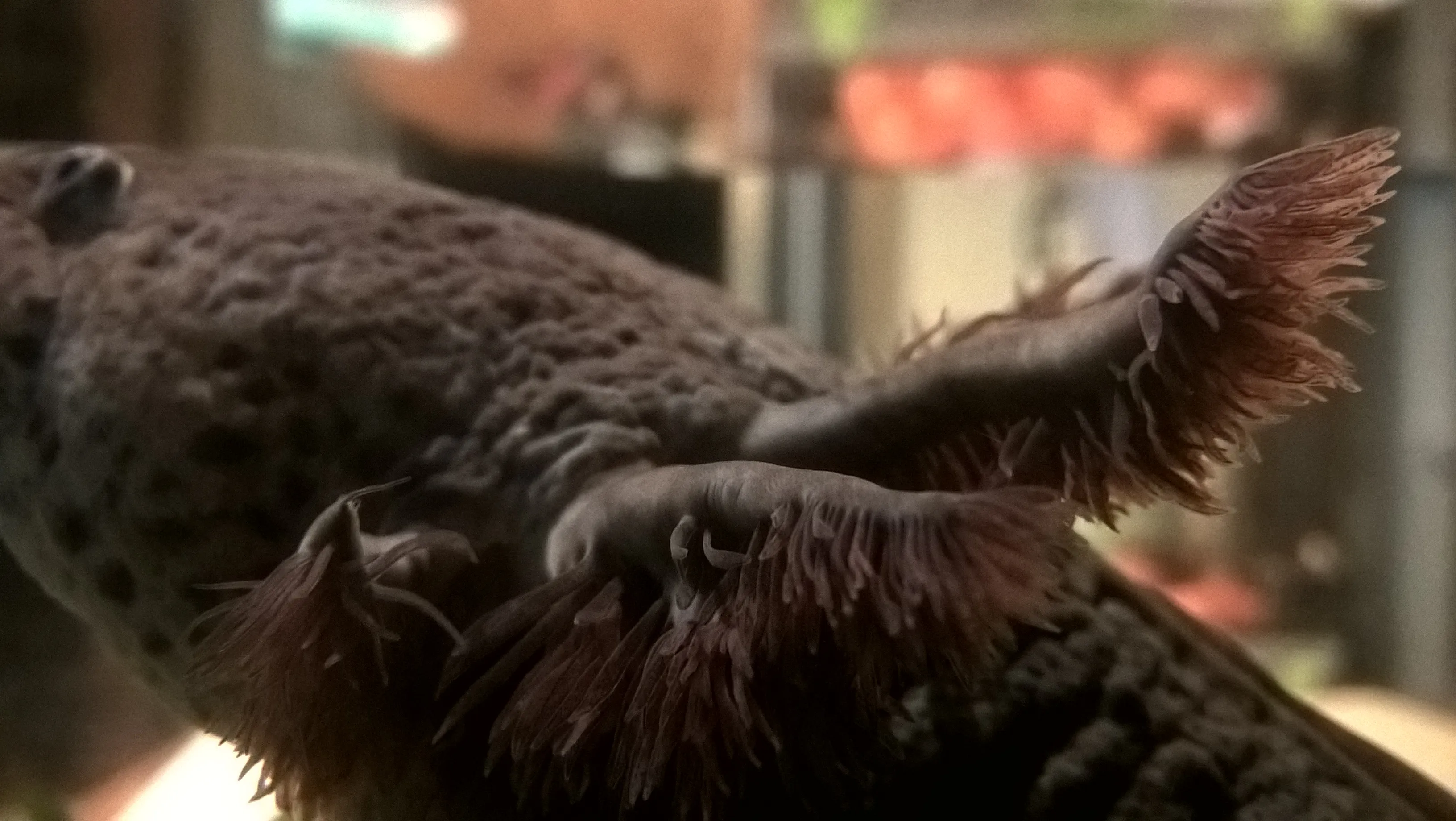
The axolotl is a Mexican salamander with a rare quirk: it never quite grows up. While most salamanders leave the water as adults, the axolotl keeps its larval features for life. It stays aquatic and holds on to its external gills — the three pairs of feathery stalks framing its head. Scientists call this neoteny. Only two or three of Mexico’s 17 salamander species can do it.
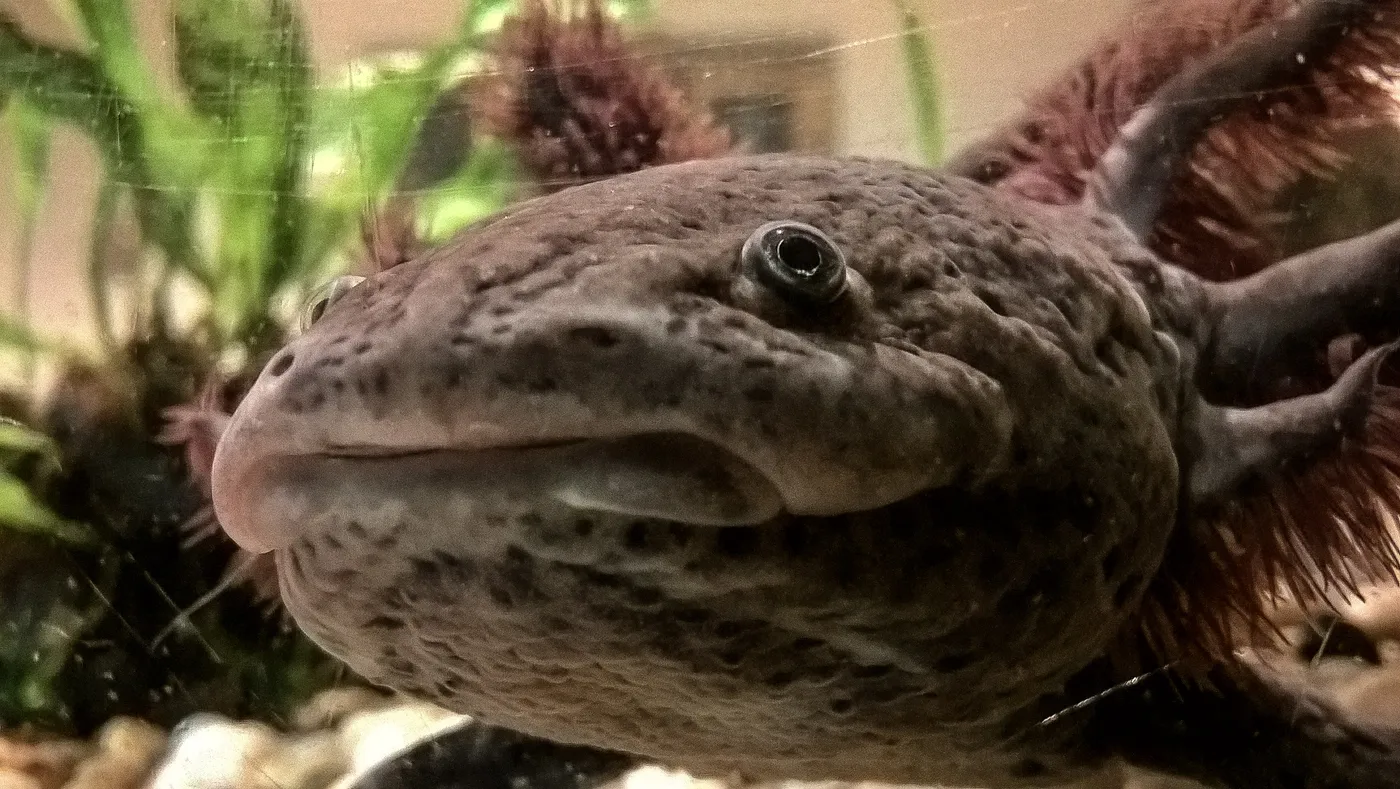
In the wild, axolotls aren’t pink: they are dark brown or greenish and speckled, which keeps them inconspicuous at the bottom of the canals. The pink or white axolotls sold in pet shops are captive-bred varieties.
Its other superpower fascinates researchers around the world: the axolotl can regenerate entire limbs and even complex organs, including parts of its heart and brain. It is studied in many medical research labs.
It lives naturally in just one place: the lake and canal system of Xochimilco, south of Mexico City. The canals surround the chinampas, farm islands built since Aztec times.
Did you know? The axolotl has become one of the most popular animals in the world, and it is common in aquariums and laboratories. But these captive animals cannot replace the wild population, adapted to the waters of Xochimilco.
Why it is endangered
The decline is staggering. In 1998, researchers estimated there were about 6,000 axolotls per square kilometre in Xochimilco. By the 2014 census, they found just 36 — a 99% drop. In 2019, the IUCN put the wild population at between 50 and 1,000 animals.
In 2024 and 2025, the National Autonomous University of Mexico (UNAM) carried out a new census across 115 sites. In the first phase, not a single axolotl was caught in the nets. But environmental DNA — genetic traces left in the water — confirmed that it still survives. It is found only in canals far from the city, where the water is clean and native fish and crayfish still live. A second phase of the census, from September 2025 to February 2026, should allow a precise comparison with 2014. Its results had not been published when we checked in October 2026; we will update this page as soon as they are.
“Habitat degradation is pushing axolotls to the brink of extinction,” says Luis Zambrano, the researcher leading the census. Several threats add up:
- Pollution of the canals, made worse by heavy pesticide use in modern farming.
- The growth of Mexico City, which is eating into the wetlands. Some chinampas have even been turned into football pitches or party venues.
- Invasive species. Carp and tilapia, introduced into the canals, eat axolotl eggs and compete with them for food and shelter.
What is being done to save it
UNAM’s ecological restoration lab, led by Luis Zambrano, works with Xochimilco’s farmers on a clever model: chinampa-refuges. Natural filters made of wood, gravel and native plants seal off certain canals to keep out carp and tilapia. The water there becomes cleaner again.
The results are encouraging: better water quality, fewer invasive species, the return of native fish such as the Chapultepec splitfin, and bigger harvests for farmers. Scaled up, these farm islands could supply up to a quarter of the flowers and vegetables bought in Mexico City. In 2025, 21 chinampa-refuges were up and running, with more planned. Farmers benefit too: their produce carries a green “chinampera” label that rewards axolotl-friendly practices.
Researchers are also testing the release of captive-bred axolotls. According to a 2025 study, axolotls released into a restored Xochimilco canal and into an artificial wetland on the UNAM campus survived, fed and put on weight. The researchers fitted 18 axolotls with radio transmitters to track their movements. Two were later eaten by egrets after the study ended. It is a promising avenue — as long as their habitat is cleaned up first.
How you can help
Sauvons les animaux does not collect donations. These recognised organisations work for the axolotl:
- Adoptaxolotl (UNAM): virtually adopt an axolotl or a refuge — you can even choose its name. Adopt an axolotl
- Conservation International supports the census and the chinampa-refuges. Donate to Conservation International
And in everyday life:
- Never release an aquarium animal into the wild — axolotl or fish. Released species can become invasive, just like the carp and tilapia in Xochimilco.
- If you visit Mexico City, choose Xochimilco boat trips that support traditional chinampas, and buy their produce.
- Remind people that wild axolotls are brown, not pink: talking about the wild species helps people understand it is endangered.
Support an organization
We do not collect donations. These trusted organizations work directly for this species:
-
Adoptaxolotl (UNAM Institute of Biology)
Virtually adopt an axolotl or a refuge in Xochimilco, from about US$10. Funds go to canal restoration, local wildlife and chinampa farmers.
Symbolic adoption — Adoptaxolotl (UNAM Institute of Biology) (external site, opens in a new tab) -
Conservation International
Through its Mexico programme, supports the axolotl census and UNAM's chinampa-refuge model.
Donate — Conservation International (external site, opens in a new tab)
In pictures
Use the left and right arrow keys to browse the photos.
-
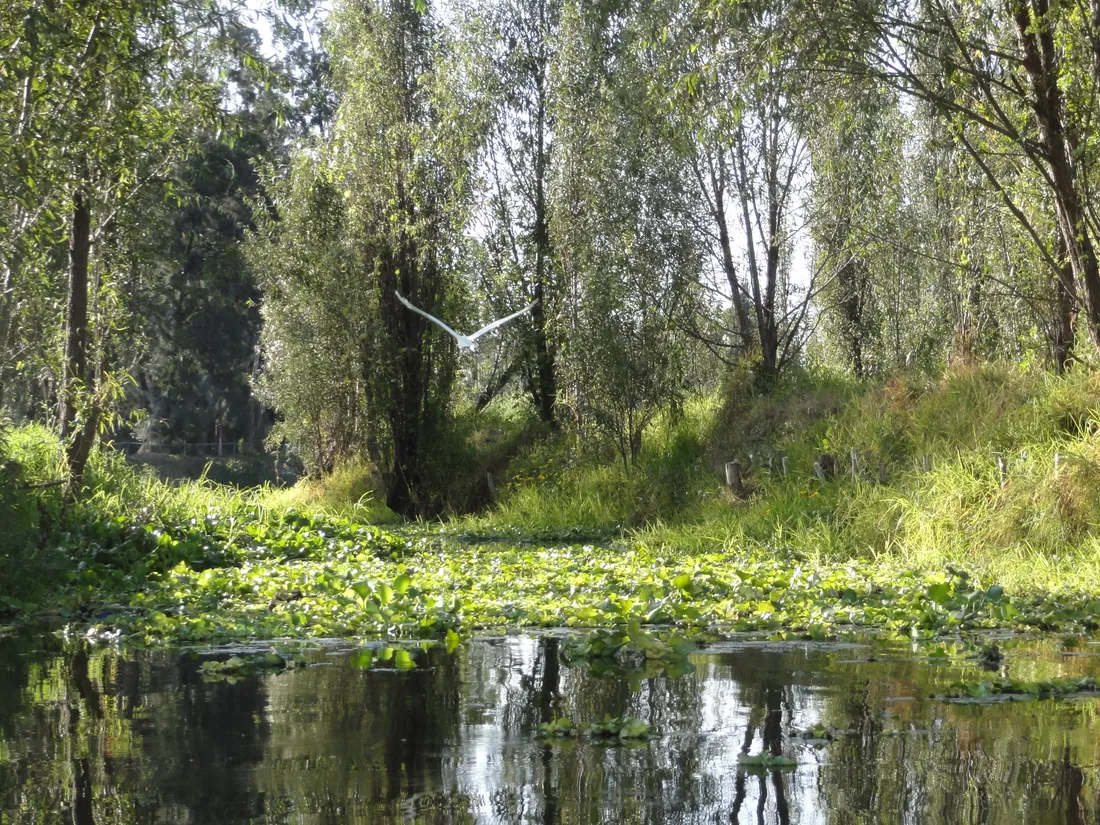
Lake Xochimilco, south of Mexico City, in 2011 — the only place on Earth where axolotls live in the wild. Photo: Hernán García Crespo, CC BY 2.0 (source) -
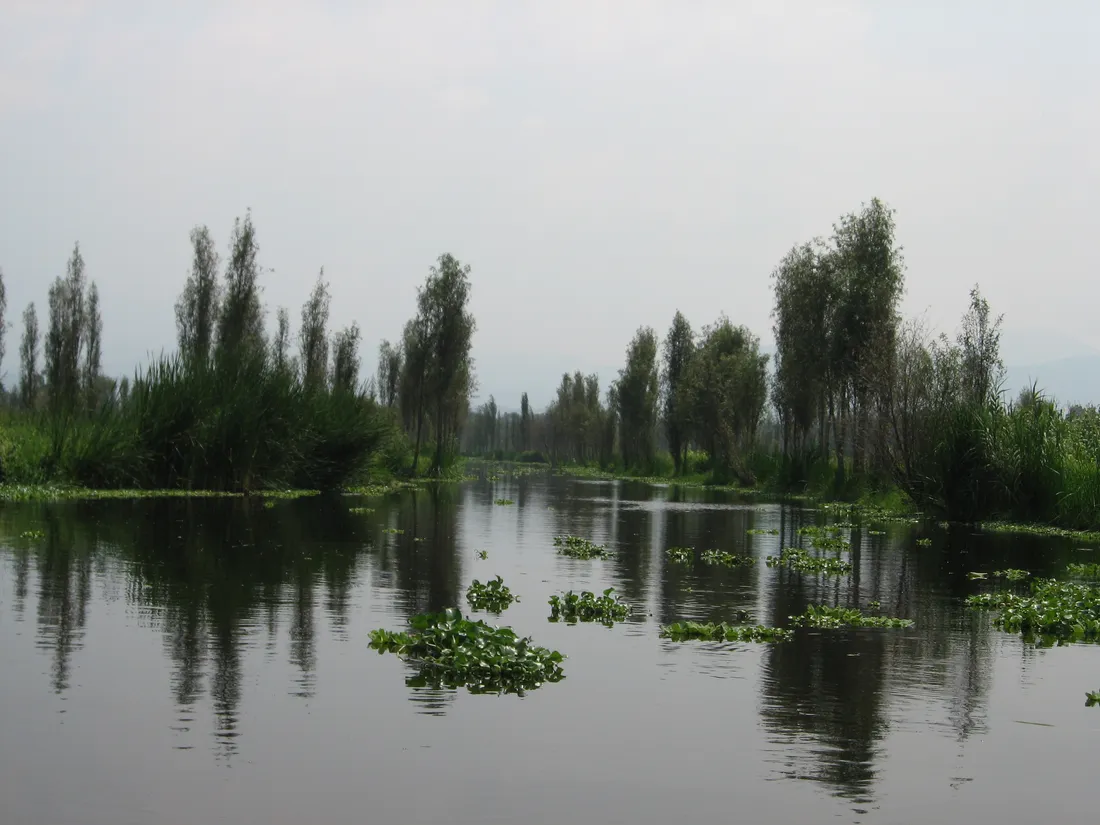
The chinampas — farm islands cultivated since Aztec times, surrounded by canals. Photo: Gael Simon, CC BY-SA 3.0 (source) -
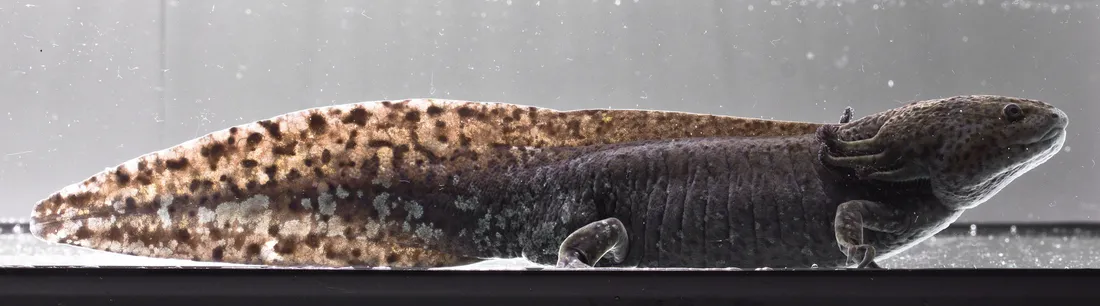
An adult axolotl with wild-type colouring, seen in full. Photo: Mariblubb, CC BY-SA 4.0 (source) -
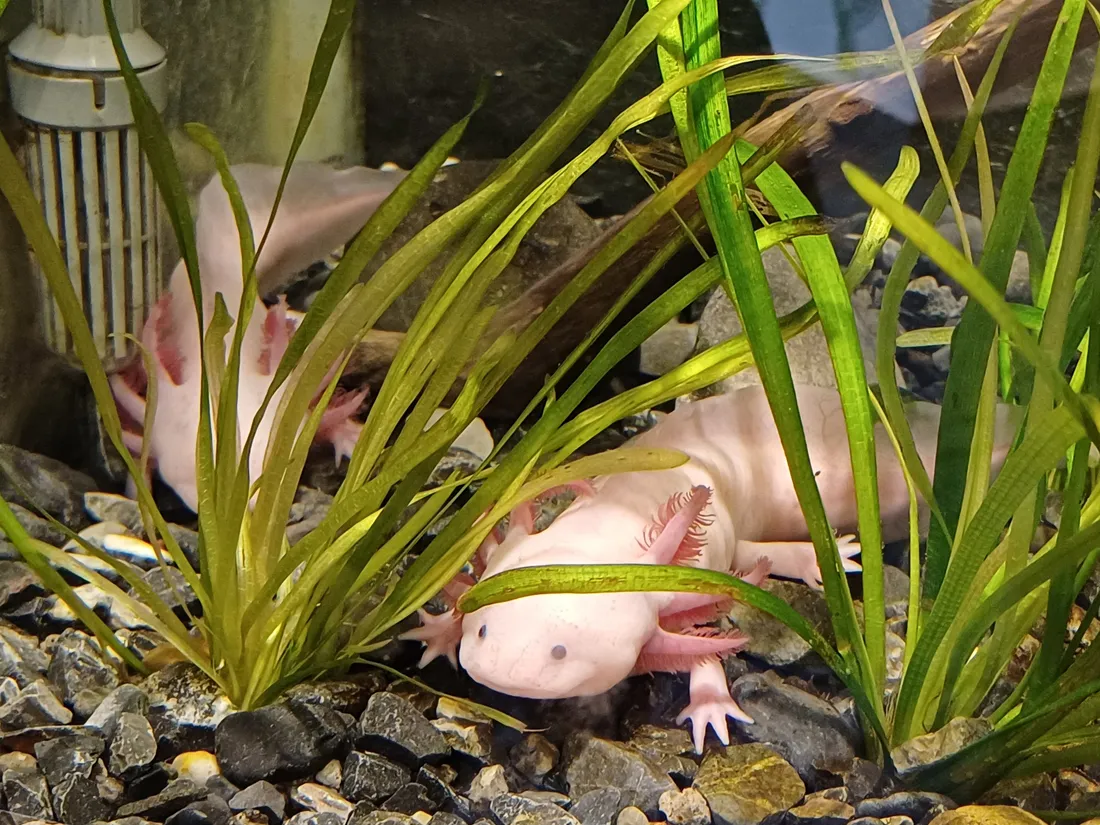
A Xochimilco axolotl at the Anfibium, the axolotl museum at Chapultepec Zoo in Mexico City, in 2024. Photo: José Luiz, CC BY-SA 4.0 (source)


Share this page
Sources
- Ambystoma mexicanum — Red List assessment (2019), IUCN, accessed .
- Axolotls are on the brink. Can we bring them back? (12 August 2025), Conservation International, accessed .
- Censo revela posible disminución de axolotes en vida silvestre (23 September 2025), Periodismo y Ambiente, accessed .
- Movement ecology of captive-bred axolotls in restored and artificial wetlands, PLoS ONE 20(4), 2025, Ramos, Mena, Schneider & Zambrano, accessed .
- How to save the Mexican axolotl? Start by restoring their home, TecScience (Tecnológico de Monterrey), accessed .
- Adoptaxolotl, UNAM Institute of Biology, accessed .
Photo credits
- A male axolotl with wild-type colouring — dark brown and speckled, a far cry from the pink axolotls in pet shops. Photo: Andrea Massagli, CC BY-SA 4.0 (source)
- The axolotl keeps its external gills for life, allowing it to breathe underwater. Photo: Andrea Massagli, CC BY-SA 4.0 (source)
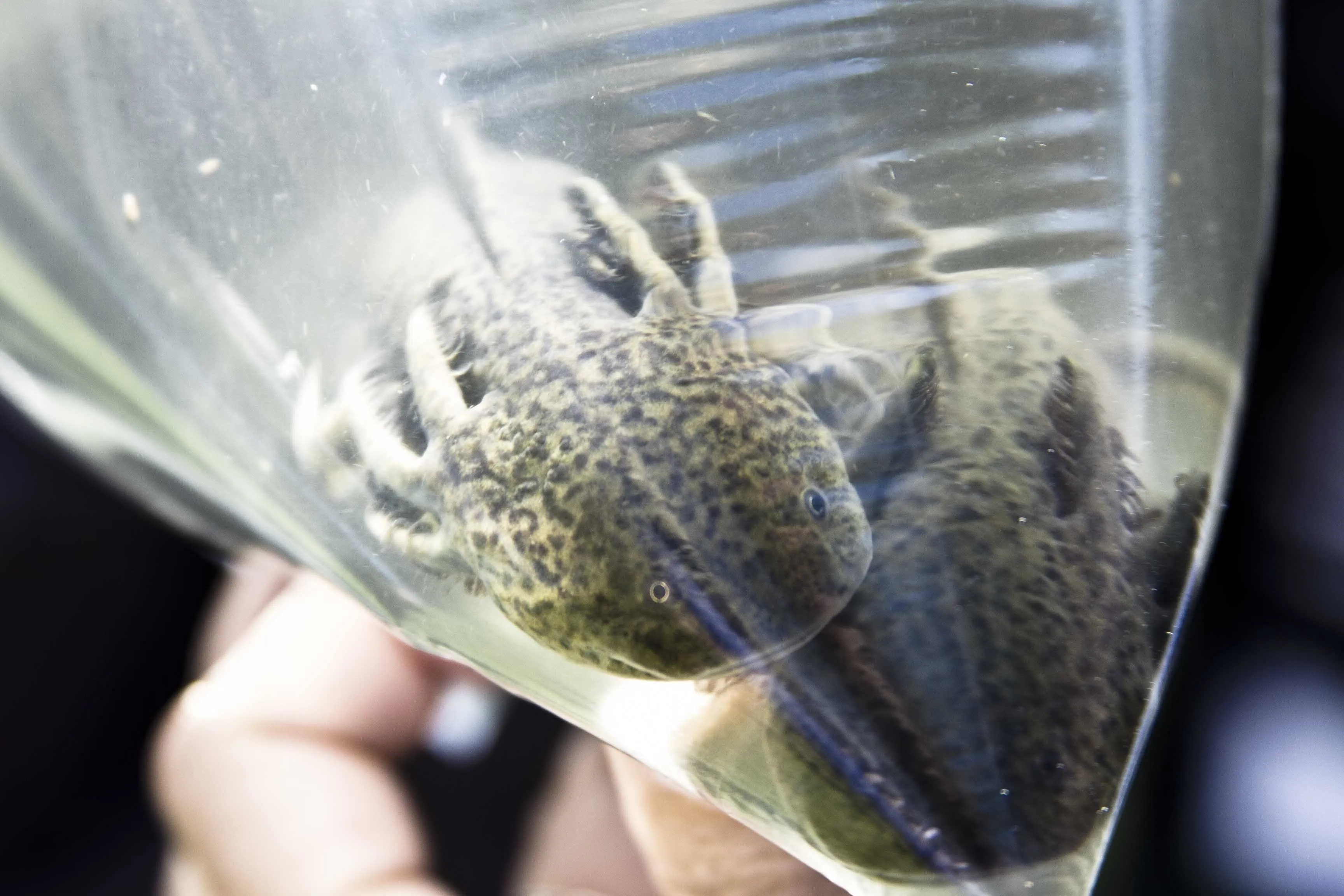
- Staff from Mexico's environment agency (SEMARNAT) prepare to release axolotls into the Xochimilco canals. Photo: SEMARNAT, Public domain (source)
- Lake Xochimilco, south of Mexico City, in 2011 — the only place on Earth where axolotls live in the wild. Photo: Hernán García Crespo, CC BY 2.0 (source)
- The chinampas — farm islands cultivated since Aztec times, surrounded by canals. Photo: Gael Simon, CC BY-SA 3.0 (source)
- An adult axolotl with wild-type colouring, seen in full. Photo: Mariblubb, CC BY-SA 4.0 (source)
- A Xochimilco axolotl at the Anfibium, the axolotl museum at Chapultepec Zoo in Mexico City, in 2024. Photo: José Luiz, CC BY-SA 4.0 (source)


Updated on
Discover other species
-
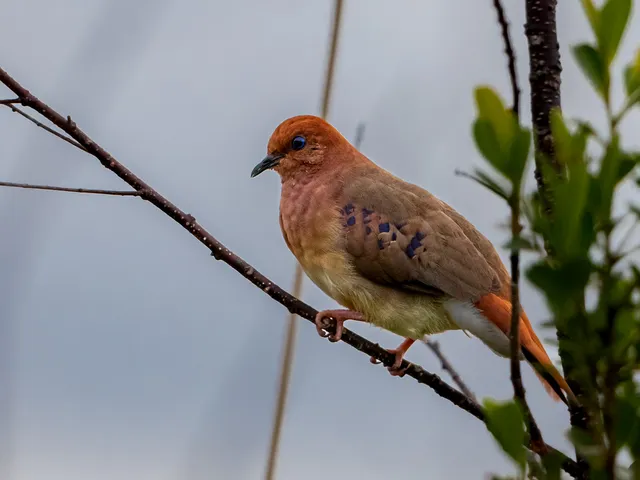
Critically Endangered Bird
Blue-eyed ground dove (rolinha-do-planalto)
Columbina cyanopis
Population: ≈ 10 adults (2025)
-
-