Mammal · Land
Hainan gibbon: the song of the world's rarest primate
At daybreak, in a forest on China's Hainan Island, the song of the planet's rarest primate rings out. In 2003, only 13 were left. Today there are 42 — a slow but genuine comeback, built on years of hard work.
13 → 42 Hainan gibbons in 2003, and in 2025
Meet the Hainan gibbon
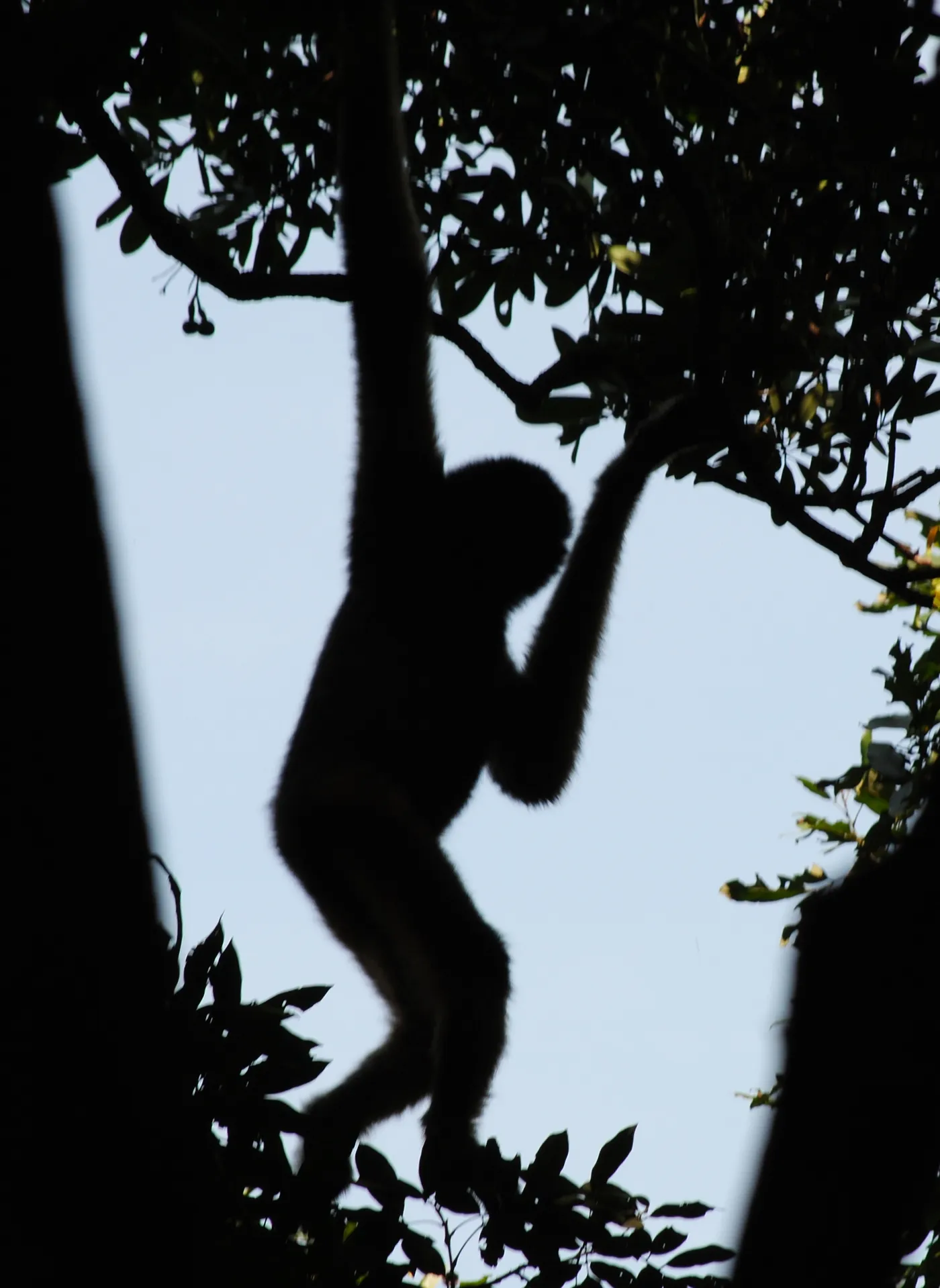
The Hainan gibbon is a small, tailless ape built for life in the trees. With long, powerful arms and elongated fingers, it swings from branch to branch — a way of moving called brachiation. Active by day, it almost never comes down to the ground.
Males and females look nothing alike. The male is jet black, with a small crest on his head and sometimes golden cheeks. The female wears a golden or cream coat with a black cap on top of her head. Oddly enough, every baby is born very pale and then turns black; females only regain their light colour once they reach adulthood.
It feeds mainly on fruit, such as figs and wild lychees, along with seeds and the occasional insect. It lives in families made up of one male, two females and their young. Females usually stay in the family they were born into.
Every morning, shortly before or after sunrise, the families sing. Their powerful songs, which carry up to two kilometres, help attract a mate, strengthen family bonds and mark out territory. Scientists also use them to count the gibbons.
Did you know? In 2016, researchers described “juggling” behaviour in Hainan gibbons — something never reported before in any non-human primate. This shy ape is still full of surprises.
Why it is endangered
In the 1950s, around 2,000 gibbons lived on Hainan Island. Hunting and logging then devastated the species. By the early 1980s, it survived only in Bawangling, one of the island’s last tropical primary forests. By 2003, just two families — 13 animals — were left.
Hunting is now under control, but a population this small faces other dangers:
- A tiny home. All the gibbons live in a single forest of about 15 km². The surrounding forests are damaged and fragmented, which makes them hard to settle.
- Inbreeding. According to the 2025 study, genetic diversity is far lower than it once was, and new pairs are increasingly closely related. The researchers sequenced the genomes of 18 of the 21 adults. They warn against capturing wild gibbons for captive breeding, which could reduce that diversity even further.
- Extreme events. A typhoon, a disease outbreak or a poor breeding season could be enough to tip a population of a few dozen animals over the edge.
What is being done to save it
Since 2003, the Hong Kong organisation Kadoorie Farm and Botanic Garden has worked with the Bawangling reserve. It trains and funds gibbon monitoring teams, supports anti-poaching patrols and runs annual censuses. It is also replanting the fruit trees gibbons feed on, to restore degraded lowland forest. In the nearby village of Qingsong, it helps residents develop livelihoods that spare the forest, such as eco-friendly beekeeping.
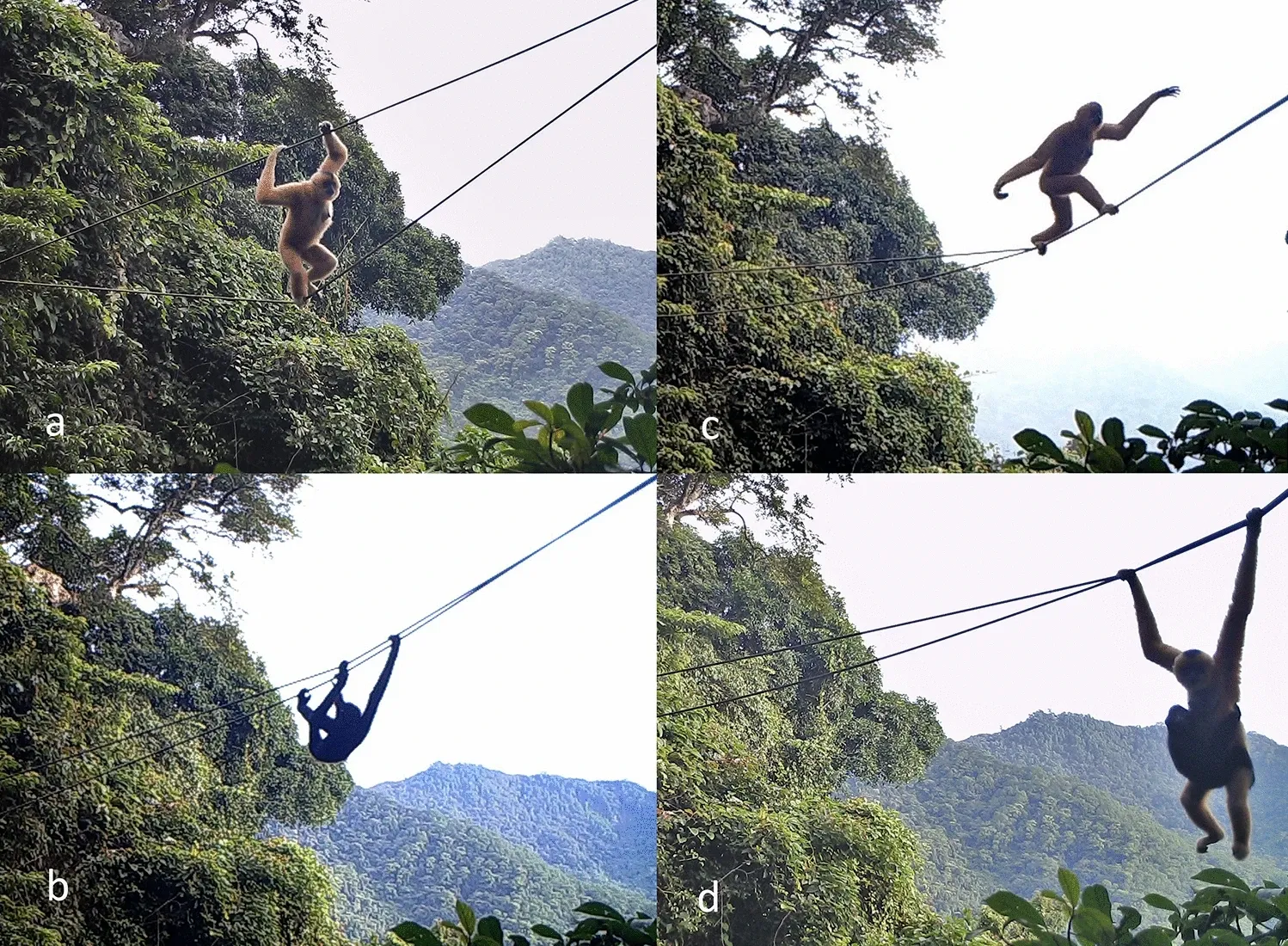
In 2014, a typhoon triggered a landslide that tore a wide gap in the canopy, right in the middle of gibbon territory. In 2015, professional tree climbers strung a 15.8-metre rope bridge across it. The gibbons ignored it at first, then started using it after 176 days — especially females and youngsters.
In October 2020, China created the Hainan Tropical Rainforest National Park, with the gibbon as its flagship species. Teams from the Zoological Society of London listen to the forest with automatic recorders, and artificial intelligence then analyses the songs.
The work is paying off: from 13 gibbons in 2003, numbers rose to 33 in 2020, then to 42 in 2025. To understand them better, researchers got two families used to their presence between 2021 and 2022 — the largest set of observations ever gathered on the species. The 2025 study brings more good news — the gibbons find enough food and breed well. Compared with other gibbons, females give birth at shorter intervals and young males leave home earlier: both signs of a healthy population. The priority now is to give them more room by creating forest corridors to neighbouring forests, so young gibbons can start families away from their relatives.
How you can help
Sauvons les animaux does not collect donations. These recognised organisations work for the Hainan gibbon:
- Kadoorie Farm and Botanic Garden has run the field programme on Hainan since 2003. Its donation form is general. Donate to KFBG
- Zoological Society of London supports reconnecting the forest and acoustic monitoring of the gibbons. Donate to ZSL
And in everyday life:
- Help its story be heard. The Hainan gibbon is rarer than the giant panda, yet almost nobody knows it exists.
- Never share videos of monkeys kept as pets. They fuel the illegal primate trade.
- Support tropical forests by choosing wood and paper from sustainably managed forests.
Support an organization
We do not collect donations. These trusted organizations work directly for this species:
-
Kadoorie Farm and Botanic Garden (KFBG)
This Hong Kong organisation has run the Hainan gibbon conservation programme since 2003: monitoring teams, patrols, censuses and reforestation.
Donate — Kadoorie Farm and Botanic Garden (KFBG) (external site, opens in a new tab) -
Zoological Society of London (ZSL)
Its scientists work with Chinese partners to reconnect the forest and to monitor gibbons by listening to their songs.
Donate — Zoological Society of London (ZSL) (external site, opens in a new tab)
In pictures
Use the left and right arrow keys to browse the photos.
-
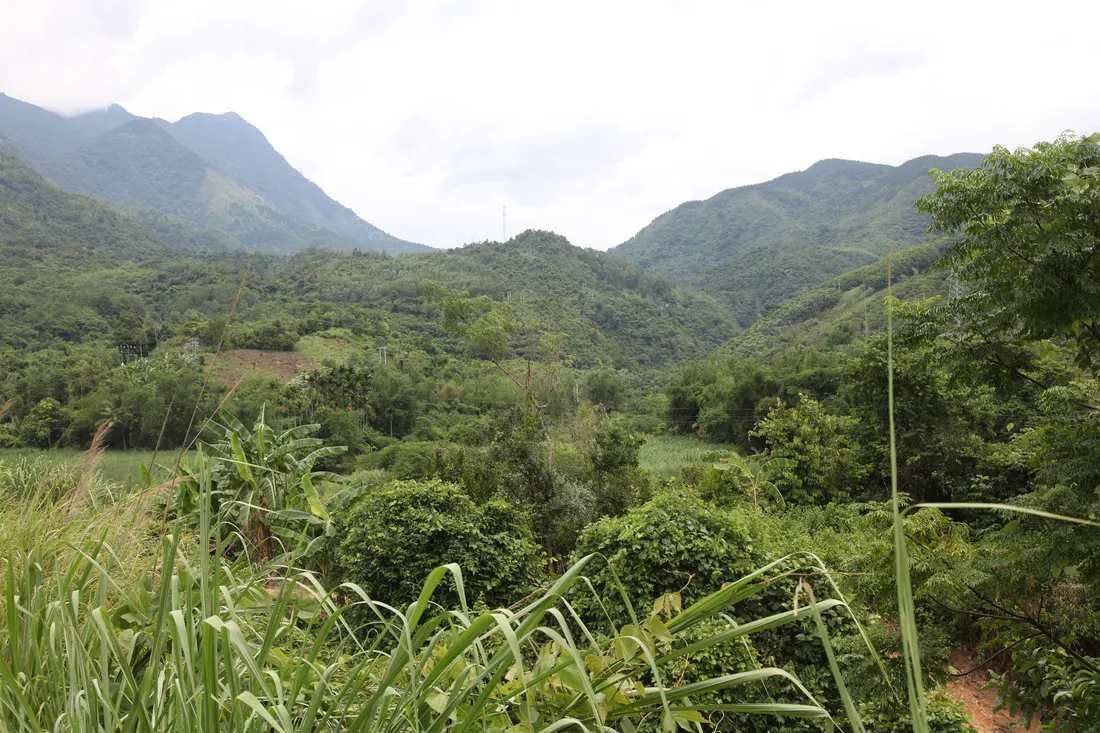
The mountain forests of central Hainan, Yinggeling area, 2013. Photo: 川号子, CC BY 3.0 (source) -
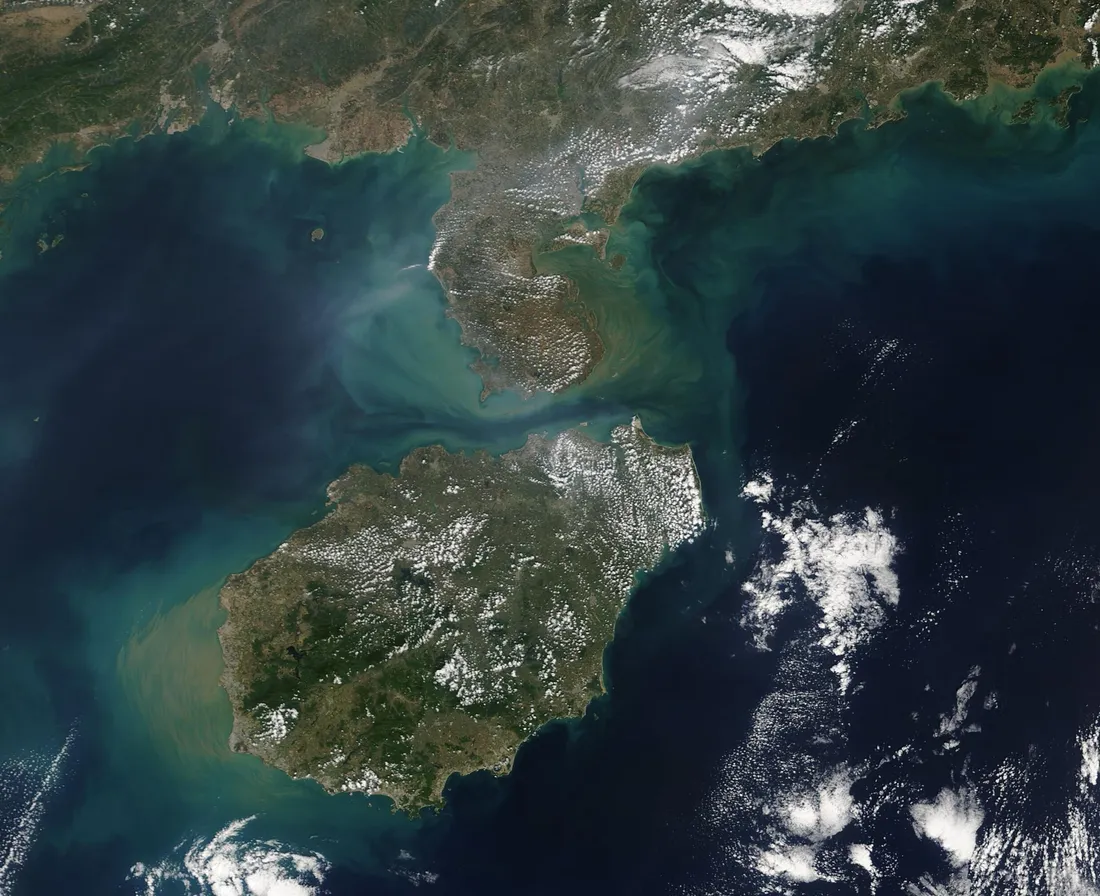
Hainan Island seen by NASA's Terra satellite in February 2021. The last gibbons live in a 15 km² forest at the heart of the island. Photo: MODIS Land Rapid Response Team, NASA GSFC, Public domain (source) -
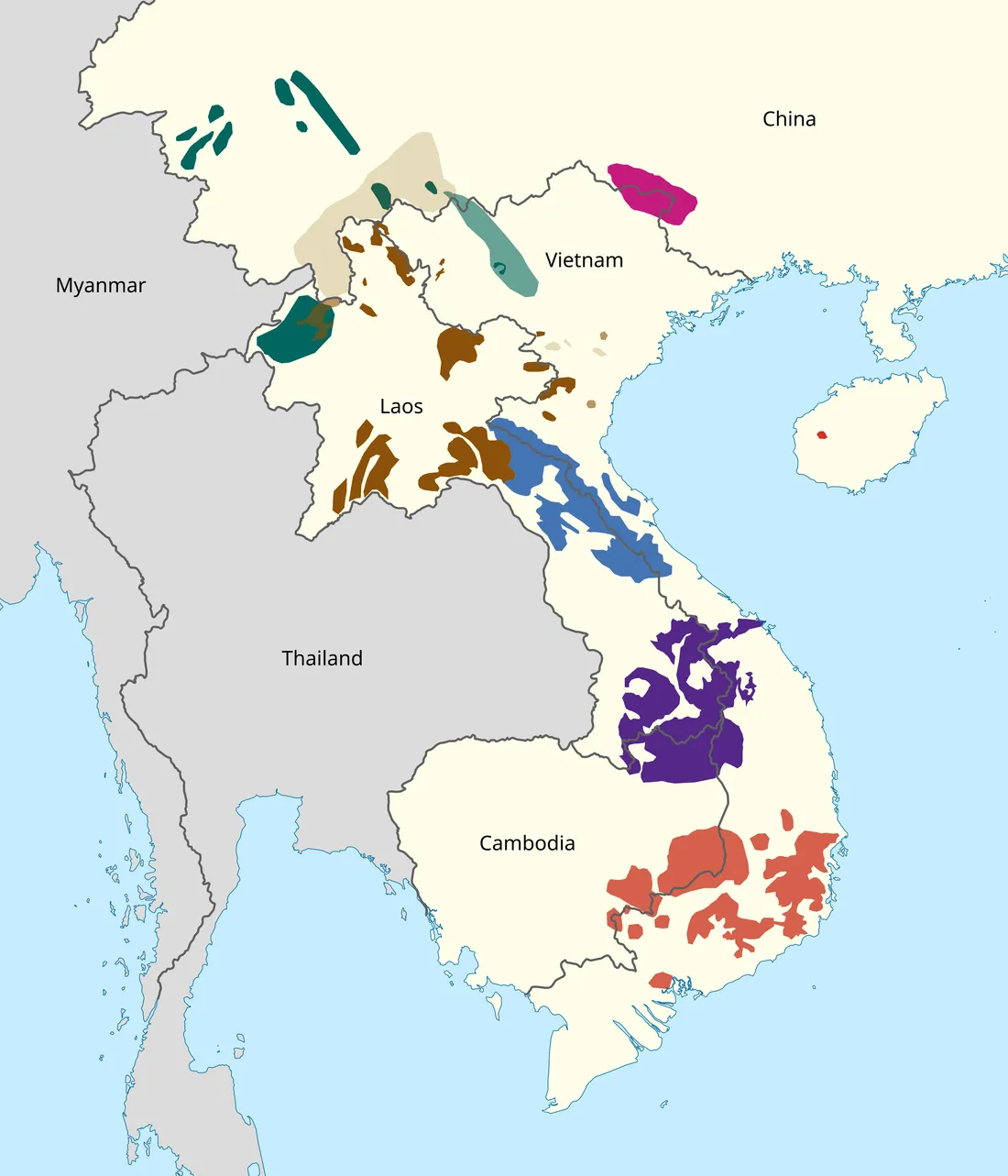
Range of the crested gibbons (genus Nomascus), based on the IUCN Red List. Photo: M. Bitton, CC BY-SA 3.0 (source)
Share this page
Sources
- Nomascus hainanus — Red List assessment (2015), IUCN, accessed .
- Hainan gibbon population (23 April 2025), China Daily, accessed .
- Hainan gibbon — species page, Zoological Society of London, accessed .
- Protecting the world's rarest primate: the Hainan gibbon, Zoological Society of London, accessed .
- Saving the singing and swinging ape of China's Hainan Island, Conservation Optimism / KFBG, accessed .
- Recovery of the Critically Endangered Hainan gibbon Nomascus hainanus, Oryx 51(1), 2017, Deng, Zhang & Zhou, accessed .
- First use of artificial canopy bridge by the world's most critically endangered primate, the Hainan gibbon, Scientific Reports, 2020, Chan et al., accessed .
- World's rarest primate helped by simple rope bridge, National Geographic, accessed .
Photo credits
- A Hainan gibbon silhouetted in the canopy, 2009. Freely licensed photos of this species are extremely rare. Photo: Anna Frodesiak, Public domain (source)
- The different ways Hainan gibbons use the rope bridge installed in 2015 over a landslide. Photo: Kadoorie Farm and Botanic Garden (camera traps), in Chan et al., Scientific Reports, 2020, CC BY 4.0 (source)
- The mountain forests of central Hainan, Yinggeling area, 2013. Photo: 川号子, CC BY 3.0 (source)
- Hainan Island seen by NASA's Terra satellite in February 2021. The last gibbons live in a 15 km² forest at the heart of the island. Photo: MODIS Land Rapid Response Team, NASA GSFC, Public domain (source)
- Range of the crested gibbons (genus Nomascus), based on the IUCN Red List. Photo: M. Bitton, CC BY-SA 3.0 (source)
Updated on