
Mammal · Land
Sumatran rhino: the last cousin of the woolly rhino
Small, hairy and two-horned, the Sumatran rhino belongs to a lineage that goes back millions of years. Only 34 to 47 are thought to survive in Indonesia's forests. At a sanctuary in Sumatra, every birth brings the species a step closer to a fresh start.
34–47 Sumatran rhinos left in the wild, down from around 800 in 1986
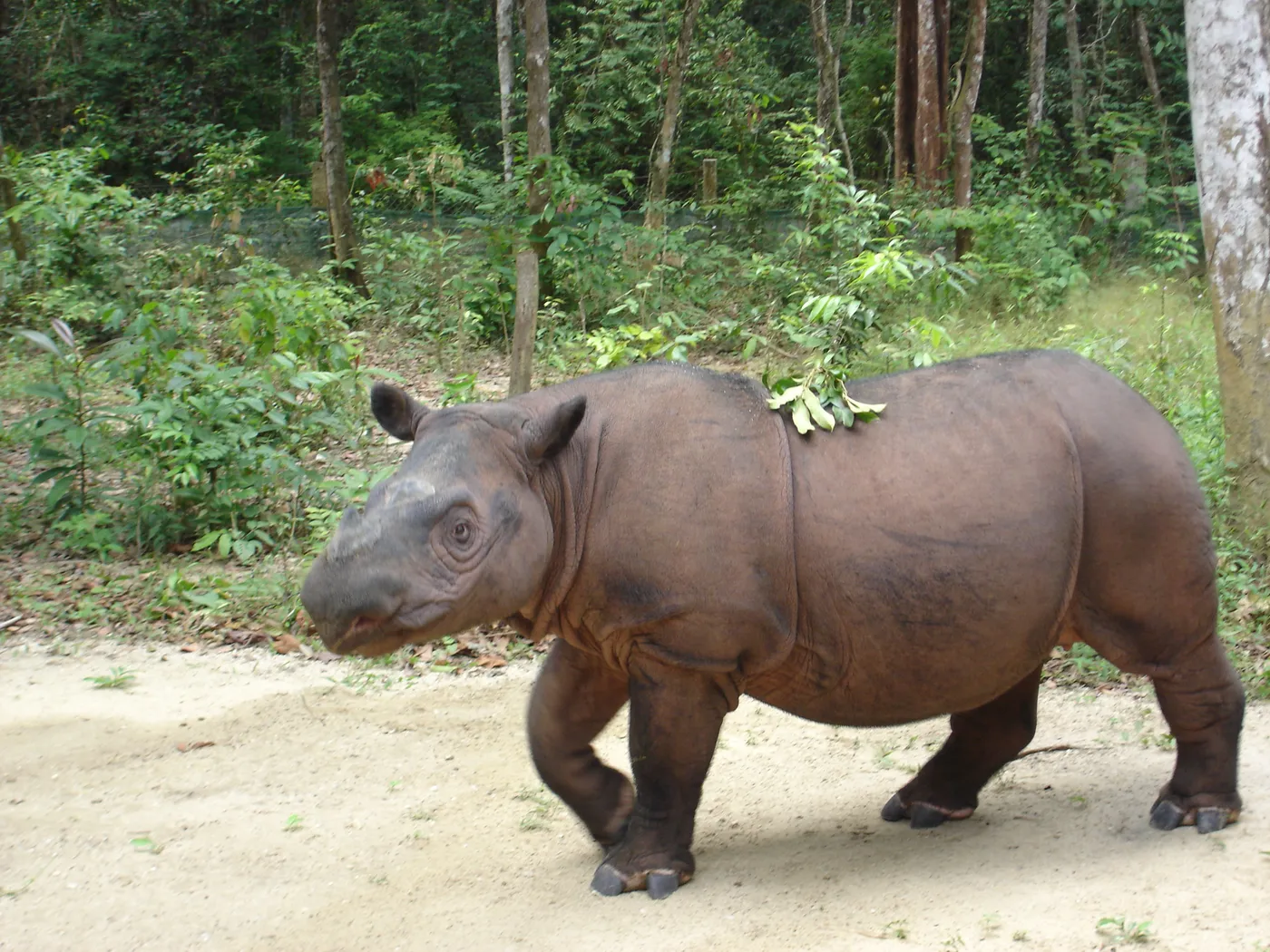
Meet the Sumatran rhino
The Sumatran rhino is the smallest of the five living rhino species. It stands 1.2 to 1.45 metres at the shoulder and is about 2.5 metres long, weighing 500 to 960 kilos. It is also the hairiest: in the wild, its reddish-brown skin is covered in short, bristly hair, and in captivity its coat becomes properly shaggy.
It has two horns: a front horn 15 to 25 centimetres long, and a second one further back that is often little more than a bump.
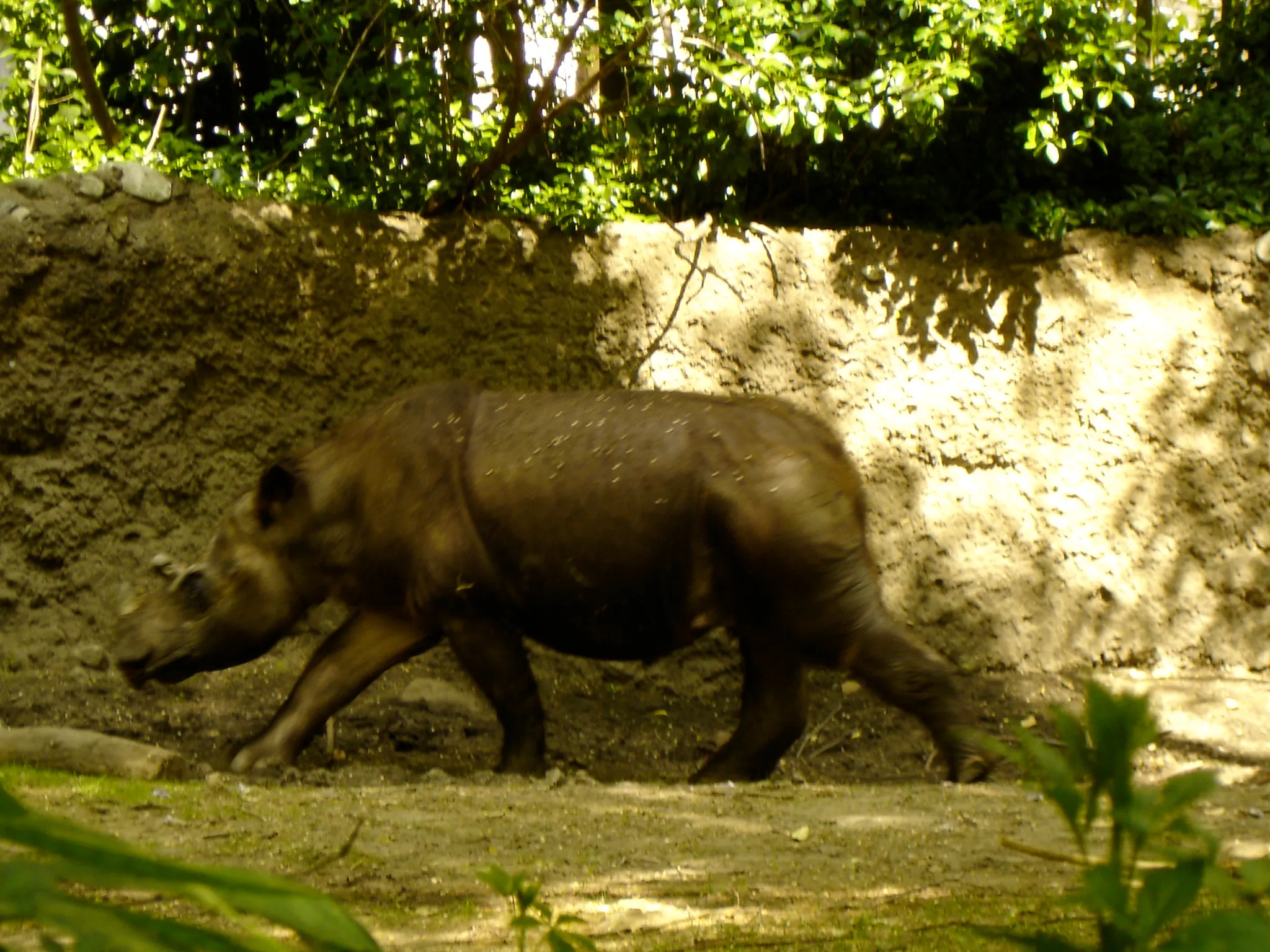
It lives in dense tropical forest, from lowlands to mountains. A solitary animal, it spends much of the day rolling in mud wallows, which keep it cool, protect its skin and get rid of parasites. It eats leaves, shoots and fruit — 50 to 60 kilos a day, almost 10% of its body weight. It is also surprisingly chatty, communicating with whistles and whines.
It was once found from the foothills of Bhutan and north-east India to southern China, Cambodia and Thailand. Today it survives only in a handful of forests in Sumatra and Borneo, in Indonesia.
Did you know? The Sumatran rhino is the closest living relative of the woolly rhino, which roamed Europe and Asia during the last Ice Age. Its reddish coat is a distant reminder of that ancestry.
Why it is endangered
The population was estimated at around 800 animals in 1986, then 280 to 320 in 2007. According to a 2025 report by the IUCN’s rhino specialists and the wildlife trade monitoring network TRAFFIC, only 34 to 47 are left in the wild.
Two threats have piled up. First, poaching for its horn, which sells for high prices on the black market. Second, the loss and fragmentation of the forests of Sumatra and Borneo. The surviving rhinos are stranded in scattered patches of forest — so few and so far apart that they struggle to find each other to breed.
That is the trap of very small populations: fewer animals mean fewer births, and every loss hits twice as hard. The 2025 report is also alarmed that no Sumatran rhinos have been confirmed in the south of the island.
In Borneo, the situation is even more critical. A distinct subspecies, the Bornean rhino, may be down to just two or three animals, according to the same report. It has already disappeared from Malaysia: in 2019, the death of Iman, a female in captivity, marked the loss of the country’s last Sumatran rhino.
What is being done to save it
In 1996, the International Rhino Foundation and the Indonesian organisation Yayasan Badak Indonesia (YABI) set up the Sumatran Rhino Sanctuary in Way Kambas National Park. Covering around a hundred hectares of forest, it is now home to ten rhinos. Their mission is to build a genetically diverse reserve population that could one day help repopulate protected forests. Keepers there also study the species’ little-known biology, to better protect it in the wild. These rhinos form an “insurance” population: once the threats are removed, they could help re-establish wild populations.
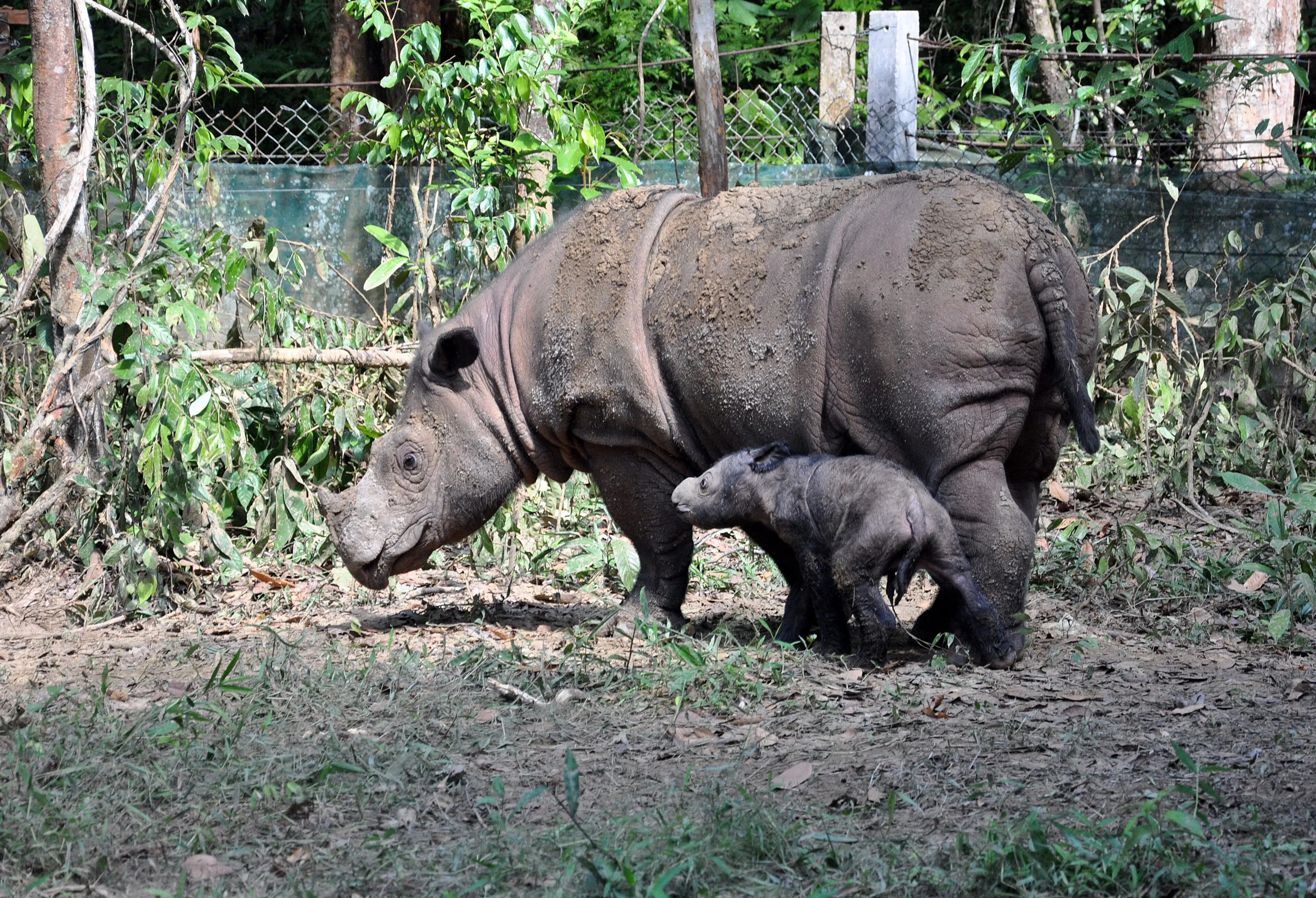
Progress is slow but real. In 2012, a female called Ratu gave birth to Andatu, the first Sumatran rhino born in captivity in Indonesia. Delilah followed in 2016, then Sedah Mirah in 2022 — after eight miscarriages by her mother — fathered by Andatu himself, and two more calves in 2023. One of them, Indra, was born to Delilah: the first time a captive-born Sumatran rhino had given birth herself.
Hope keeps growing. In October 2026, Indonesia’s Forestry Ministry announced that Ratu and Delilah were each expecting another calf. Ratu, aged 26, is expecting her fourth and Delilah, aged 10, her second. “This achievement did not happen overnight,” the ministry stressed. In the field, the priority remains finding and protecting the last wild rhinos before they become too isolated to breed.
How you can help
Sauvons les animaux does not collect donations. These recognised organisations work for the Sumatran rhino:
- International Rhino Foundation supports the Way Kambas sanctuary and the protection of the species. Donate to the International Rhino Foundation
- Save the Rhino International funds programmes for all five rhino species. Donate to Save the Rhino
And in everyday life:
- Don’t believe the horn myth. Rhino horn is made of keratin, just like our fingernails. Spread the word: demand is what drives poaching.
- Be wary of products linked to tropical deforestation. Choose certified wood and paper, and palm oil from responsible supply chains.
- Introduce people to this little-known rhino — very few know there is such a thing as a hairy rhino.
Support an organization
We do not collect donations. These trusted organizations work directly for this species:
-
International Rhino Foundation
Co-founded the Way Kambas sanctuary in 1996 with the Indonesian organisation YABI, and supports breeding and protection of the species.
Donate — International Rhino Foundation (external site, opens in a new tab) -
Save the Rhino International
Funds conservation programmes for all five rhino species, in Africa and Asia.
Donate — Save the Rhino International (external site, opens in a new tab)
In pictures
Use the left and right arrow keys to browse the photos.
-
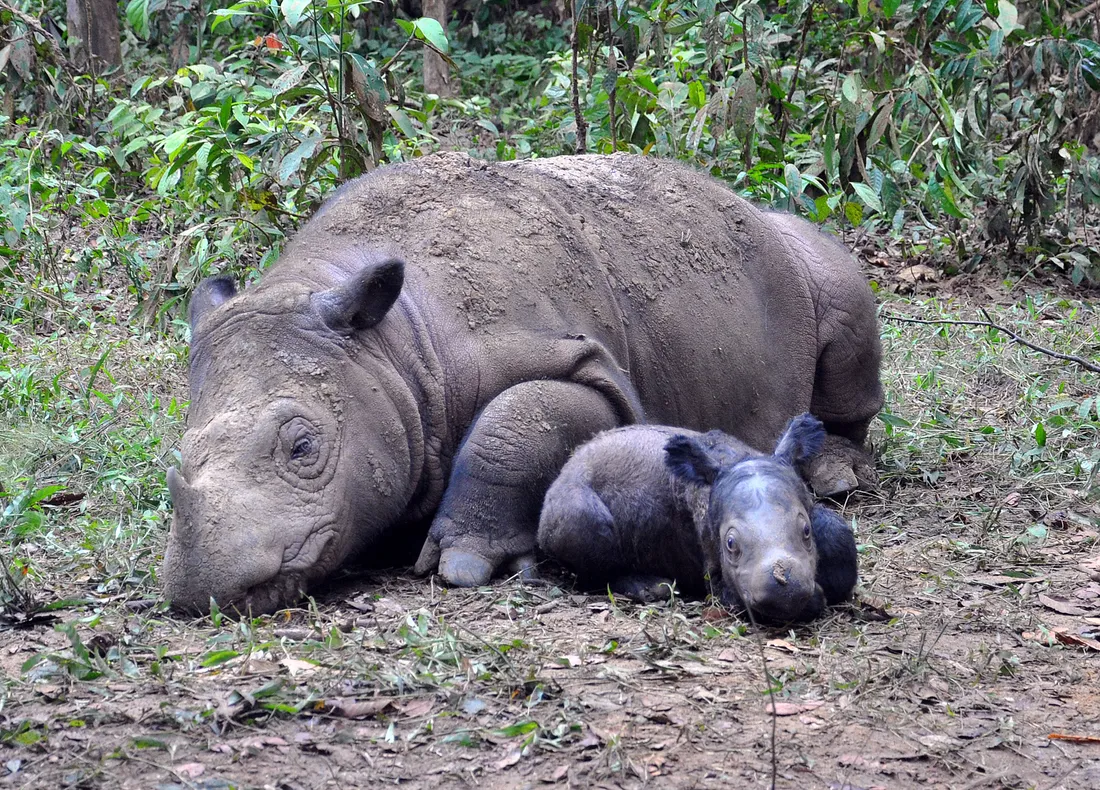
Resting together, a few hours after Andatu's birth. Photo: International Rhino Foundation, CC BY 2.0 (source) -
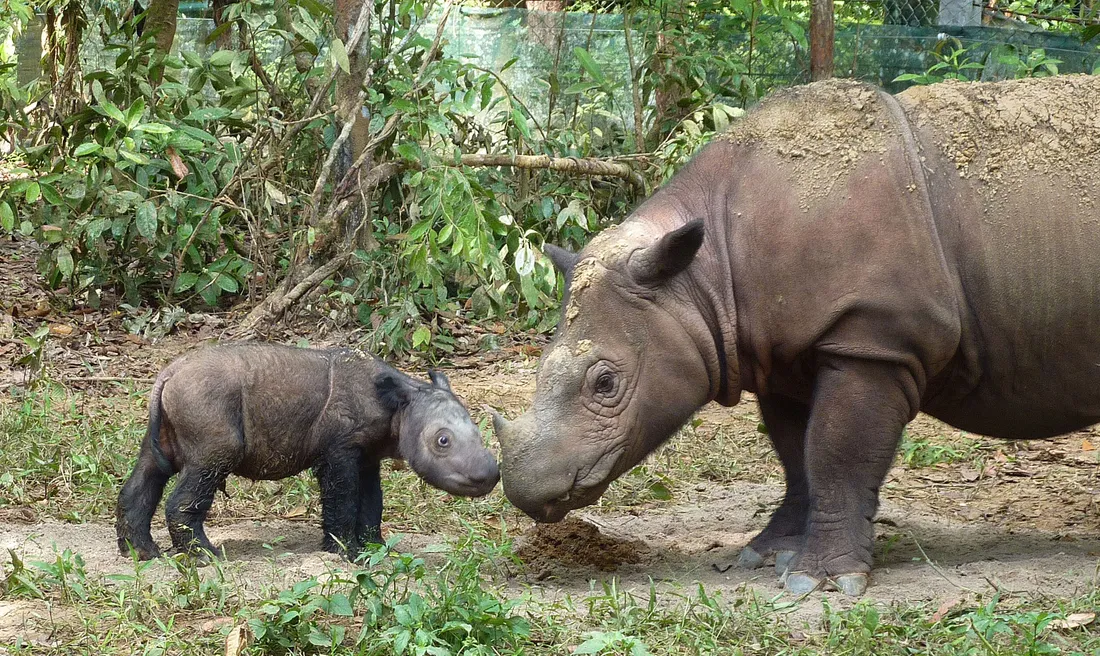
Ratu and Andatu, four days after the birth. Photo: S. Ellis / International Rhino Foundation, CC BY 2.0 (source) -
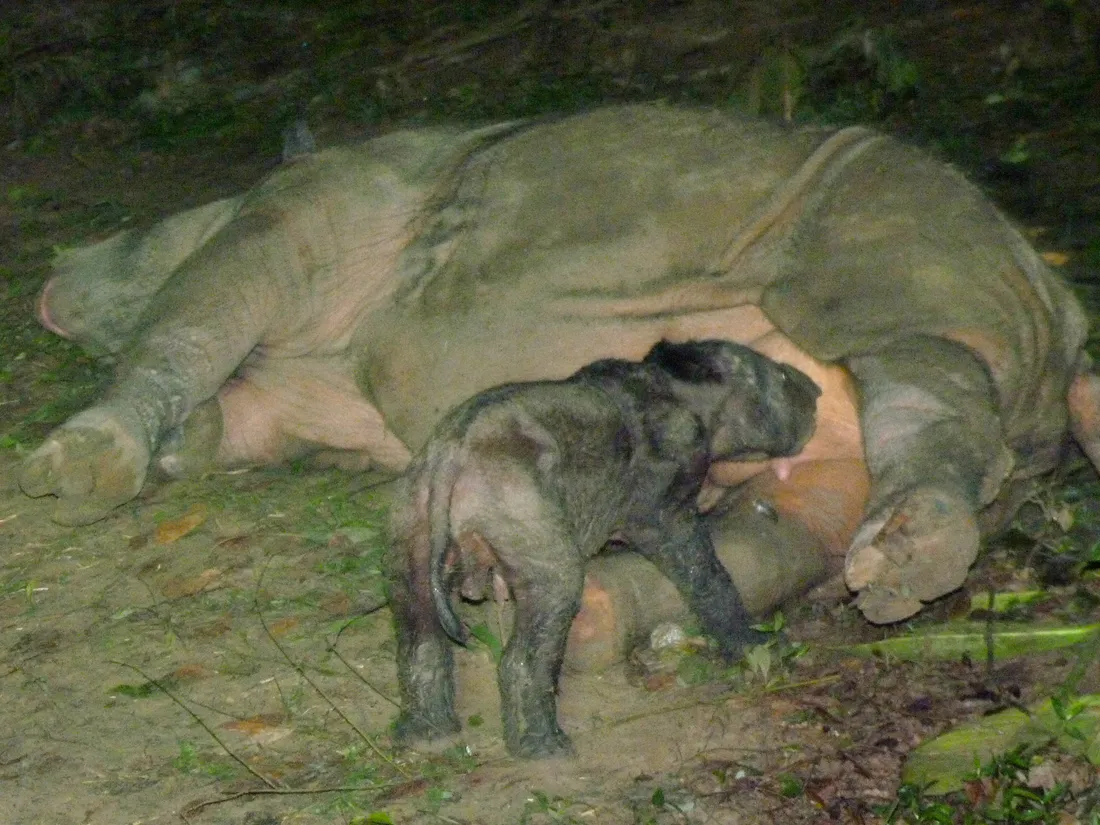
The calf suckles within its first hours, with keepers following every detail. Photo: B. Bryant / International Rhino Foundation, CC BY 2.0 (source)


Share this page
Sources
- Dicerorhinus sumatrensis — Red List assessment (2019), IUCN, accessed .
- Poaching of African rhinos down, drought and other threats drive losses globally (7 August 2025), IUCN, accessed .
- Javan rhino numbers plunge, Sumatran rhinos remain near extinction: report (13 August 2025), Mongabay, accessed .
- Sumatran rhino — species page, Save the Rhino International, accessed .
- Sumatran Rhino Sanctuary, International Rhino Foundation, accessed .
- Malaysia's last Sumatran rhino dies, leaving Indonesia as the final refuge (November 2019), Mongabay, accessed .
- Pregnancies of two Sumatran rhinos raise hope for conservation efforts (8 October 2026), The Star, accessed .
Photo credits
- Ratu, a female at the Way Kambas sanctuary in Sumatra, in 2013. Photo: 26Isabella, CC BY-SA 3.0 (source)
- The hairiest of all rhinos: in captivity, its coat grows especially thick. Photo: nicolaitan, CC BY-SA 2.0 (source)
- Ratu and her calf Andatu in June 2012 — the first Sumatran rhino born in captivity in Indonesia. Photo: International Rhino Foundation, CC BY 2.0 (source)
- Resting together, a few hours after Andatu's birth. Photo: International Rhino Foundation, CC BY 2.0 (source)
- Ratu and Andatu, four days after the birth. Photo: S. Ellis / International Rhino Foundation, CC BY 2.0 (source)
- The calf suckles within its first hours, with keepers following every detail. Photo: B. Bryant / International Rhino Foundation, CC BY 2.0 (source)


Updated on
Discover other species
-
-
-
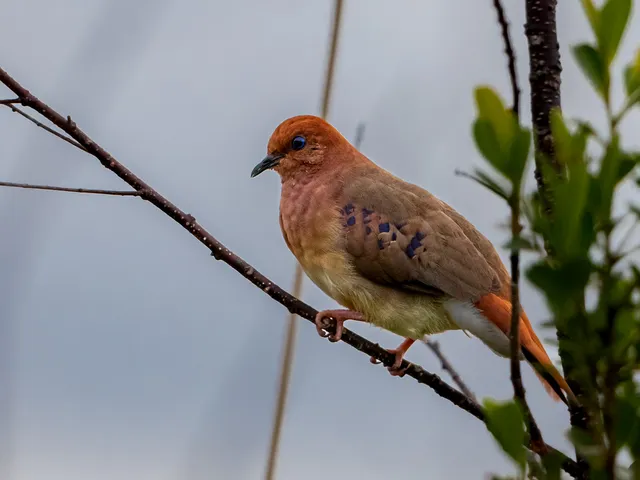
Critically Endangered Bird
Blue-eyed ground dove (rolinha-do-planalto)
Columbina cyanopis
Population: ≈ 10 adults (2025)